How does virtual fencing work?
The virtual fence is a zone-based technology that uses sound and electrical pulses to guide the animals’ movements. Below is the technical logic behind how the collar operates.
Signal sequence: Sound as guidance
When an animal crosses the virtual fence boundary, the collar starts a warning sequence designed to guide the animal back.
Dynamic sound signal (0–7 seconds):
The collar emits a sound signal that acts as guidance for the animal. If the animal continues moving in the wrong direction (away from the fence), the sound gradually increases in intensity. If the animal turns and begins moving back toward the safe zone, the sound gradually decreases until it stops completely once the animal has returned inside the boundary.
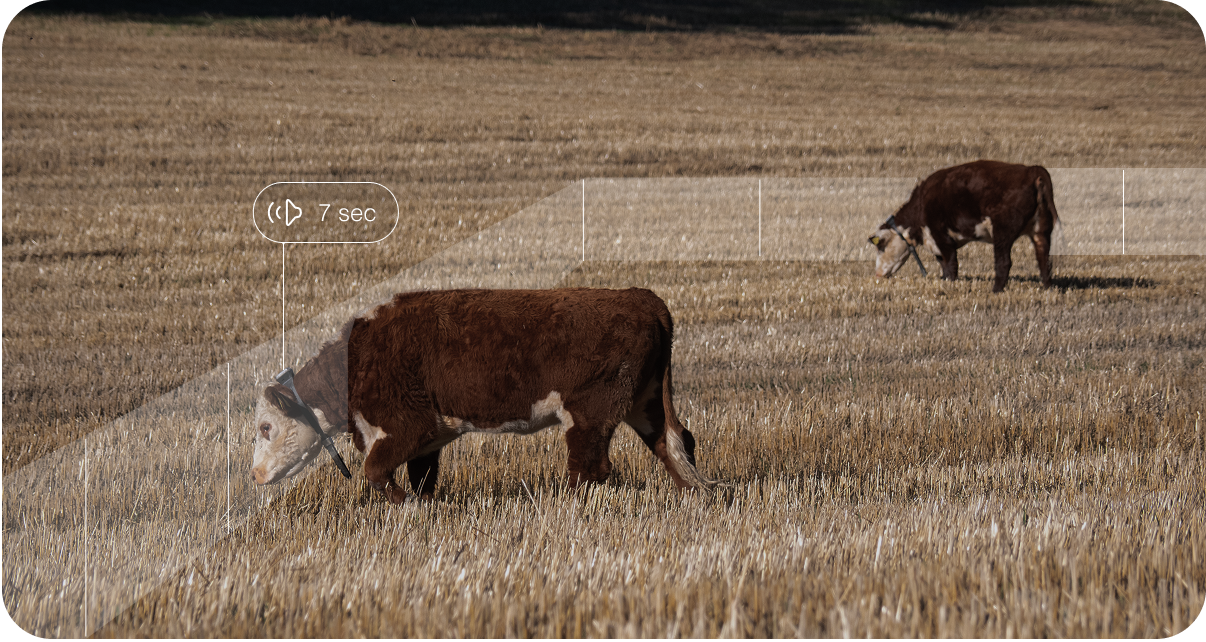
Electrical pulse: If the animal continues moving in the wrong direction despite the increasing sound signal, a short electrical pulse is delivered after 7 seconds.
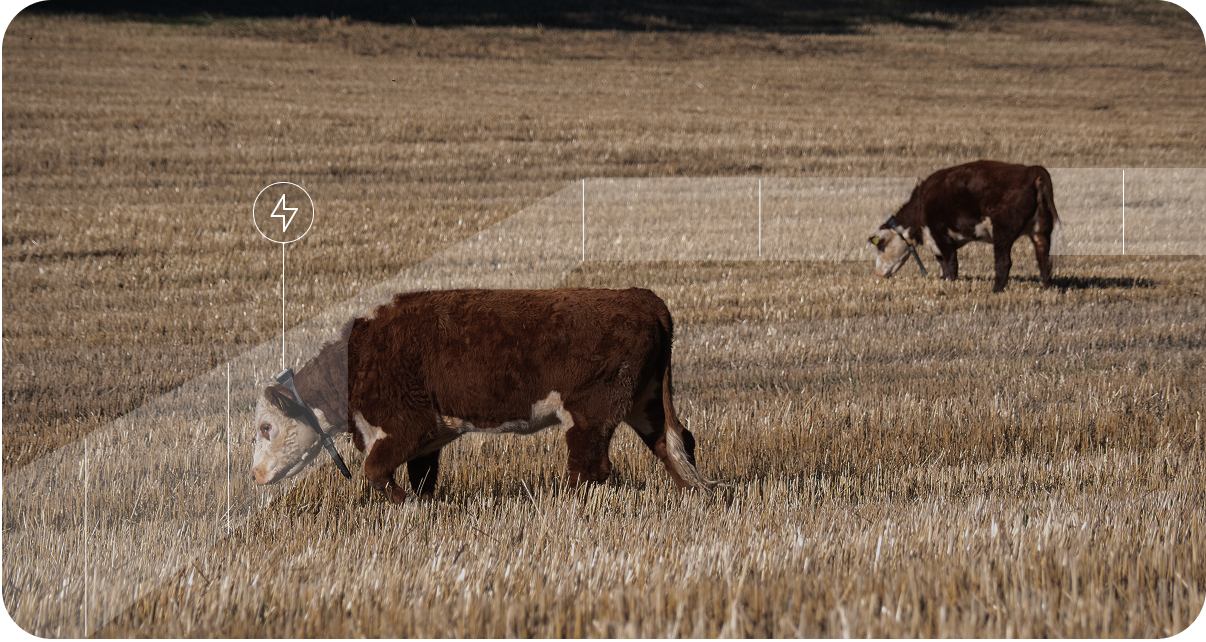
Repetition: The collar delivers up to three rounds of sound and pulse if the animal continues moving outward. A short pause between each round gives the animal time to react and turn back.

When an animal is registered as “escaped”
If the animal has not turned back after three completed rounds, it is defined as “escaped” in the system. This is done to safeguard animal welfare:
All signals stop: The collar stops delivering both sound and pulses. This ensures the animal is not unnecessarily driven further away or stressed on the wrong side of the boundary.
Farmer notification: You will immediately receive a push notification in the app, and you can follow the animal’s position in real time on the map.
Automatic reactivation: The fence automatically becomes active again once the animal has moved at least 3 meters back inside the fence boundary. The collar never delivers signals when the animal is moving back into the grazing area.
Use of collars within the herd
For the virtual fence to function as a reliable barrier for the entire herd, the following guidelines apply:
All adult animals must wear a collar: Animals without collars will be able to move freely, which can create confusion and unrest within the herd.
Calves: We do not recommend using collars on animals younger than 6 months. From around 6 months of age, animals become more independent and mature enough for training. Therefore, we recommend using collars on all animals older than 6 months to ensure optimal control and stability within the herd.